The Foundation of Stable and Scalable IT Systems
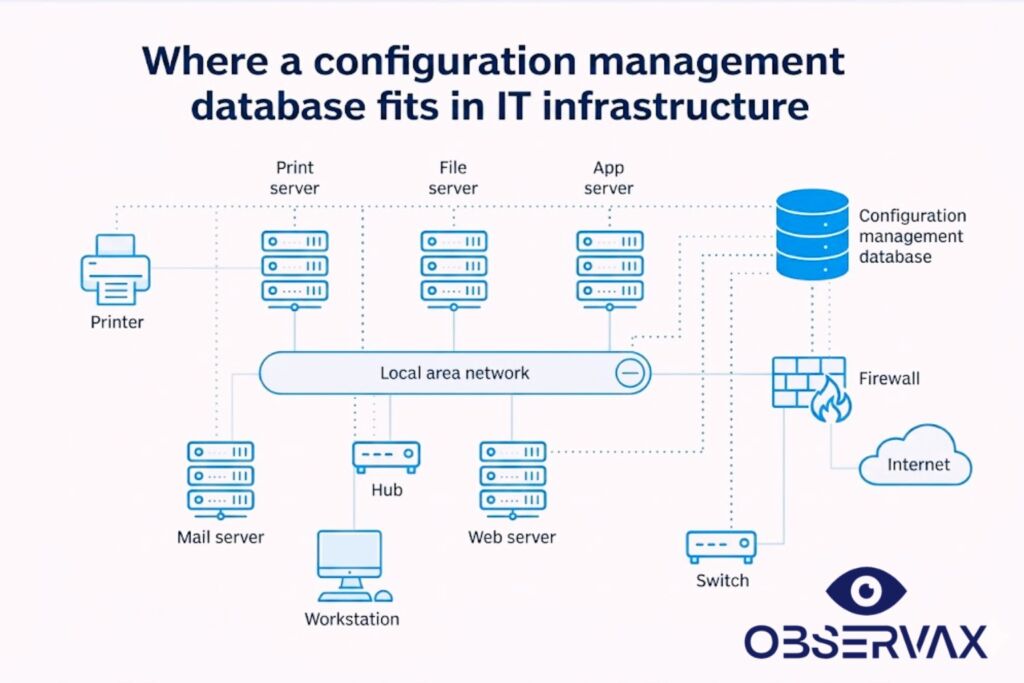
In today’s complex IT environments, organizations rely on hundreds or even thousands of interconnected components—servers, applications, databases, cloud services, and network devices. Managing these components without a structured approach can lead to inconsistencies, downtime, and security risks.
This is where Configuration Management becomes essential. It provides a systematic way to track, manage, and control IT assets and their configurations throughout their lifecycle. Instead of operating in silos, organizations gain complete visibility into how systems are structured and how changes impact the overall environment.
Configuration Management transforms IT operations from reactive troubleshooting to proactive control and governance, ensuring stability, reliability, and scalability across the entire infrastructure.
What is Configuration Management?
Configuration Management is the process of identifying, documenting, and maintaining information about IT assets and their relationships. It ensures that all components in an IT environment are known, controlled, and updated in a consistent manner.
At the core of Configuration Management is the concept of a Configuration Item (CI)—any component that needs to be managed, such as hardware, software, or network elements.
It focuses on:
- Maintaining accurate records of IT assets
- Tracking relationships between components
- Managing configuration changes systematically
- Preventing unauthorized or untracked modifications
- Ensuring consistency across environments
Rather than just storing data, Configuration Management enables organizations to understand how everything in IT is connected and impacted by change.
Why Configuration Management is Critical in 2026
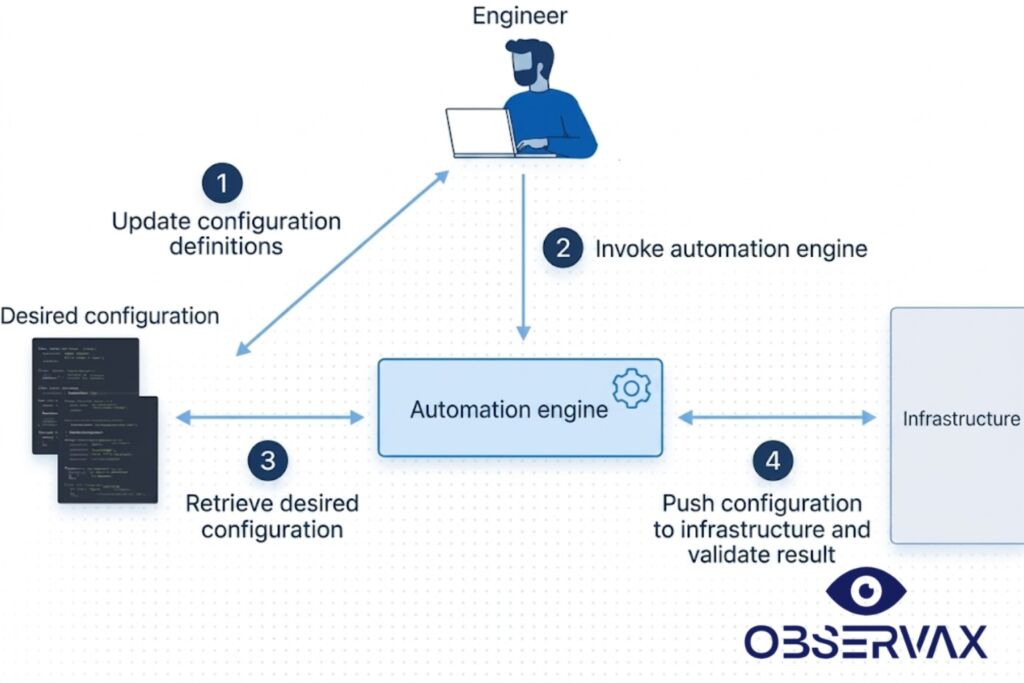
Configuration Management is essential because it provides visibility, control, and consistency across complex IT environments. As organizations scale their infrastructure across on-premise, cloud, and hybrid systems, managing configurations without a structured approach can lead to errors, outages, and security vulnerabilities. Configuration Management ensures that all IT assets and their relationships are accurately documented, making it easier to understand dependencies and assess the impact of changes. It helps prevent unauthorized or untracked modifications, reduces configuration drift, and enables faster troubleshooting by providing reliable data. Ultimately, it allows organizations to maintain stable, secure, and predictable IT operations while supporting continuous change and innovation.
As businesses adopt hybrid cloud, microservices, and DevOps practices, IT environments are becoming increasingly dynamic and distributed. Without proper configuration control, even a small change can trigger large-scale disruptions.
Configuration Management is critical because it provides:
- Visibility into complex IT ecosystems
- Control over frequent infrastructure changes
- Risk reduction during deployments and updates
- Faster troubleshooting through dependency mapping
- Improved compliance and audit readiness
In modern enterprises, where change is constant, Configuration Management ensures that systems remain stable, predictable, and secure.
Key Components of Configuration Management
An effective Configuration Management framework is built on several key elements that ensure accuracy and control.
1. Configuration Items (CIs)
These are the individual components being managed—servers, applications, databases, etc.
2. Configuration Management Database (CMDB)
A centralized repository that stores information about CIs and their relationships.
3. Configuration Baselines
Standardized configurations used as reference points for comparison.
4. Change Control
Processes to manage and approve configuration changes.
5. Relationship Mapping
Defines how different components interact and depend on each other.
6. Version Control
Tracks changes made to configurations over time.
Together, these components create a single source of truth for IT environments, enabling better control and decision-making.
How Configuration Management Works
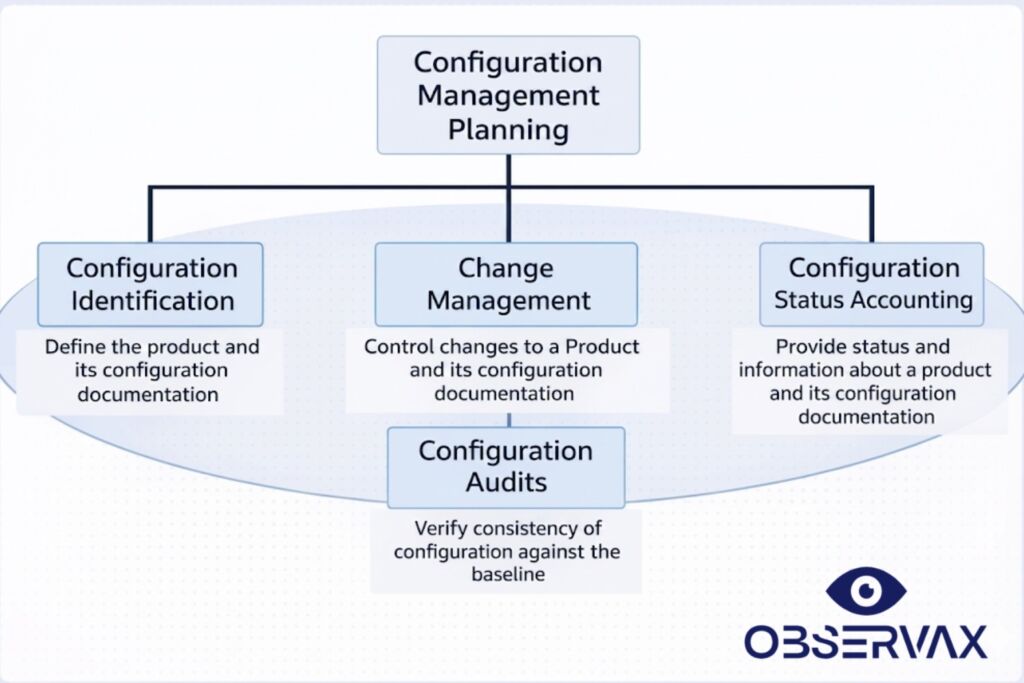
Configuration Management operates through a continuous lifecycle that ensures systems remain accurate and up to date.
Step-by-Step Process
- Identify Configuration Items
Discover and document all IT assets. - Record and Store Data
Capture details such as versions, dependencies, and ownership. - Establish Baselines
Define standard configurations for consistency. - Monitor Changes
Track updates and detect configuration drift. - Control Modifications
Ensure all changes follow approved processes. - Audit and Validate
Regularly verify configuration accuracy.
This lifecycle ensures that IT environments are controlled, consistent, and continuously optimized.
Key Benefits of Configuration Management
Configuration Management delivers strong operational and business value by bringing structure, accuracy, and control to IT environments. It ensures that all systems and components are consistently configured and properly documented, reducing the risk of errors and unexpected failures. With clear visibility into asset relationships and dependencies, IT teams can troubleshoot issues faster and make informed decisions during changes or upgrades. It also improves coordination across teams by providing a single source of truth, enabling smoother workflows and better collaboration. Over time, Configuration Management enhances system reliability, strengthens security, and supports compliance requirements, helping organizations operate more efficiently while maintaining stable and predictable IT performance.
Key Benefits
- Improved visibility across IT assets and dependencies
- Faster incident resolution through accurate data
- Reduced risk of configuration errors and outages
- Better change management and impact analysis
- Enhanced compliance and audit readiness
- Increased operational efficiency through automation
By maintaining accurate and up-to-date configuration data, organizations can ensure reliable and predictable IT operations.
Essential Features of Configuration Management Systems
Modern Configuration Management solutions are equipped with capabilities that support dynamic IT environments.
Core Features
- Asset discovery and inventory management
- CMDB with relationship mapping
- Change tracking and version control
- Configuration baseline management
Advanced Features
- Automated configuration monitoring
- Drift detection and alerts
- Integration with ITSM and DevOps tools
- Real-time dashboards and analytics
Enterprise Capabilities
- Role-based access control
- Compliance and audit reporting
- Multi-cloud and hybrid environment support
- API integrations and automation workflows
These features enable organizations to manage configurations efficiently across complex, distributed infrastructures.
Configuration Management vs Other IT Solutions
Configuration Management is often confused with other IT processes, but its role is unique. While other systems focus on operations, monitoring, or security, Configuration Management focuses on understanding and controlling the structure of IT environments.
- ITSM: Manages service delivery, while Configuration Management provides the data foundation for those services
- IT Asset Management (ITAM): Tracks asset ownership and cost, while Configuration Management tracks relationships and configurations
- NMS: Monitors network performance, while Configuration Management tracks how network components are configured
- DevOps Tools: Automate deployments, while Configuration Management ensures consistency and control
In simple terms, other tools manage activities, but Configuration Management ensures everything is correctly structured and connected.
Best Practices for Implementing Configuration Management
Successful implementation requires a structured and strategic approach:
- Start by identifying critical configuration items
- Maintain an accurate and updated CMDB
- Standardize configurations using baselines
- Automate discovery and monitoring processes
- Integrate with change and incident management
- Conduct regular audits to ensure data accuracy
A phased approach helps organizations build a reliable and scalable configuration management framework.
The Future of Configuration Management
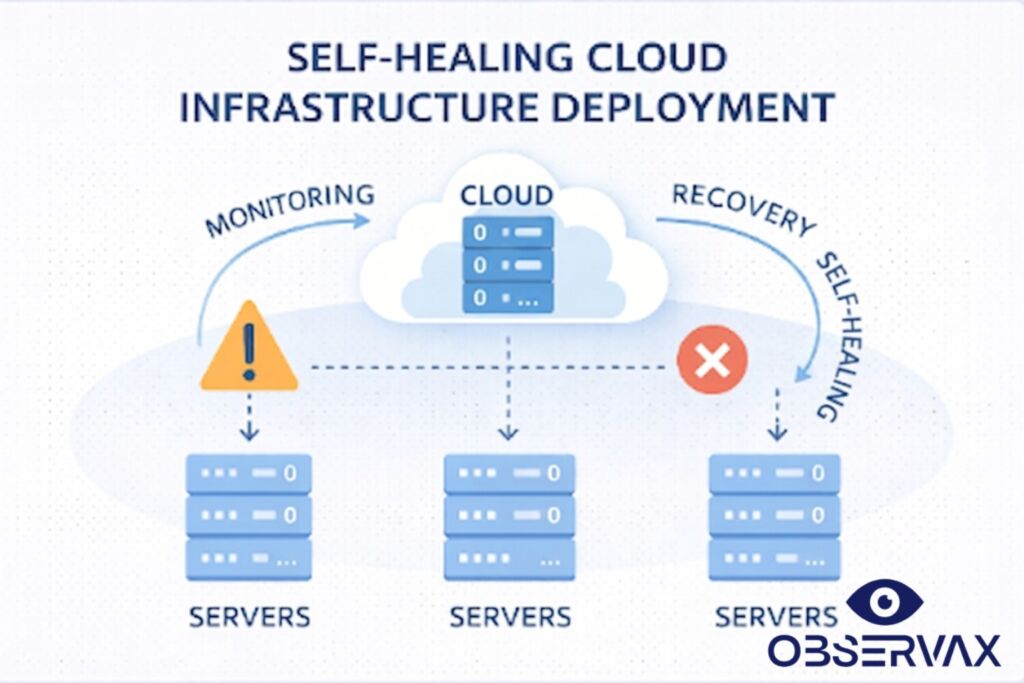
The future of Configuration Management is
moving toward intelligent, automated, and highly adaptive systems that can
manage increasingly complex IT environments with minimal human intervention.
With the rise of cloud-native architectures, microservices, and Infrastructure
as Code (IaC), configurations are becoming more dynamic and continuously
changing. As a result, Configuration Management will evolve to leverage
artificial intelligence and machine learning to detect anomalies, predict
configuration issues, and recommend or even implement corrective actions automatically.
Real-time visibility across multi-cloud and hybrid environments will become
standard, while self-healing systems will be able to resolve configuration
drift without manual effort. Additionally, deeper integration with DevOps
pipelines will ensure that configurations are consistent from development to
production. Overall, Configuration Management will shift from being a control
mechanism to a proactive, intelligent system that enables agility, resilience,
and continuous innovation.
Emerging Trends
- AI-driven configuration analysis and optimization
- Infrastructure as Code (IaC) for automated provisioning
- Self-healing systems that auto-correct configuration issues
- Real-time visibility across multi-cloud environments
- Integration with DevOps and continuous delivery pipelines
As IT environments continue to evolve,
Configuration Management will become more intelligent, automated, and
adaptive, enabling organizations to manage complexity with ease.
Conclusion
Configuration Management is no longer just
a backend IT process—it is a critical foundation for modern digital operations.
As organizations scale their infrastructure and adopt new technologies,
maintaining control over configurations becomes essential for ensuring
stability, security, and performance.
By providing a centralized view of IT
assets and their relationships, Configuration Management enables better
decision-making, faster troubleshooting, and more efficient change management.
It helps organizations move from uncertainty to clarity, where every component
is known, controlled, and optimized.
More importantly, it bridges the gap
between infrastructure and service delivery, ensuring that IT systems are not
only operational but also aligned with business needs.
Organizations that invest in Configuration
Management are building a resilient, scalable, and future-ready IT
environment—one where change is controlled, risks are minimized, and
performance is consistently optimized.