
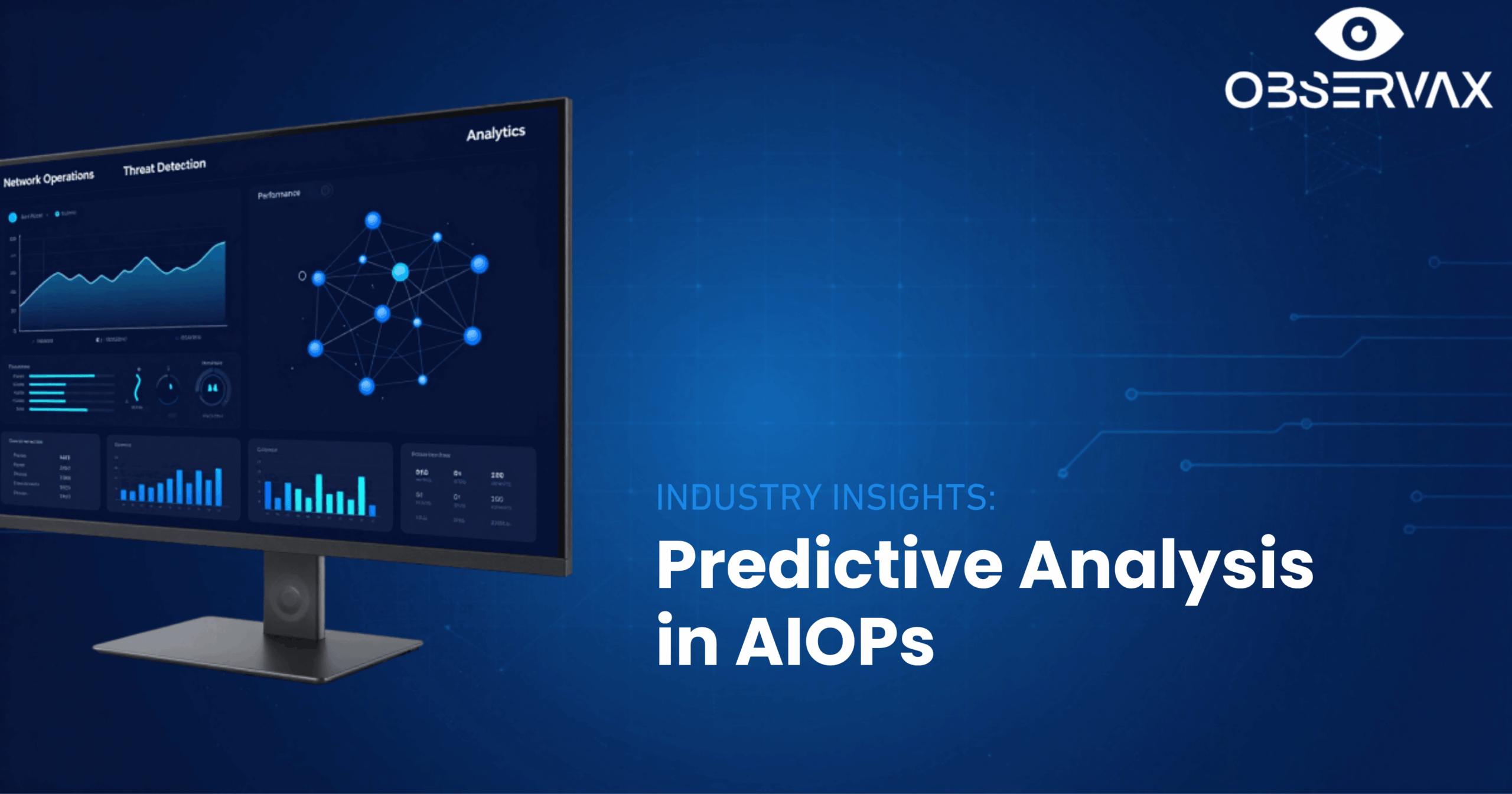
You’re dealing with complex IT environments that never sleep, and traditional reactive approaches just don’t cut it anymore. Predictive analytics in AIOps transforms how you manage your infrastructure by spotting problems before they impact your users. This comprehensive guide is designed for IT operations teams, DevOps engineers, and technology leaders who want to move beyond firefighting to proactive system management.
Your current monitoring tools tell you what happened, but AIOps predictive analysis shows you what’s coming next. By combining machine learning IT operations with real-time data analysis, you can prevent outages, optimize performance, and reduce operational costs significantly.
In this guide, you’ll discover the essential data sources for effective prediction models that power successful AIOps implementations. We’ll walk you through proven AIOps implementation strategies that work in real enterprise environments, not just theoretical scenarios. You’ll also learn practical methods for measuring AIOps ROI so you can demonstrate clear business value to stakeholders and justify continued investment in artificial intelligence operations prediction technologies.
What is Predictive Analysis in AIOps?
Predictive analysis in AIOps involves leveraging machine learning, past performance trends, and live telemetry to anticipate IT failures before they happen. AIOps platforms don’t wait for an alert to fire, but instead continuously analyse patterns from logs, metrics, events and network flows, and detect deviations that signal an emerging issue.
It’s sort of like giving your NOC a crystal ball, but with the power of data science instead of a crystal ball.
The core inputs that drive this capability include:
- Logs and system events
- Network performance metrics (CPU, RAM, bandwidth)
- Historical trend data
- Real-time telemetry from devices and applications
Why is Predictive Analysis Critical in Modern IT Operations?
Today’s IT environments are not simple nor predictable. This is because many systems, cloud platforms, and distributed networks operate in tandem, and with any system there could be an issue that has a large impact on the overall performance.
This is why predictive analysis has become a critical part of modern IT operations.
Minimizing Downtime
Unplanned downtime can disrupt business operations and affect user experience. Predictive analysis helps identify potential issues early, allowing teams to take action before failures occur.
Improving Operational Efficiency
IT teams often spend a lot of time troubleshooting problems. With predictive insights, they can focus on resolving the root cause faster and reduce manual effort.
Enhancing Performance
By continuously monitoring patterns, predictive systems help optimize performance and ensure systems run smoothly.
Strengthening Security Awareness
Unusual behavior patterns can also indicate potential security risks. Predictive analysis helps detect these early and improves overall system protection.
How Predictive Analysis Works in AIOps
Understanding the mechanics helps IT leaders evaluate platforms more effectively. Here’s how predictive analysis flows in a modern AIOps system:
- Data Ingestion
- Telemetry is collected from network devices, servers, cloud workloads, and applications creating a unified data foundation.
- Data Normalization
- Data from diverse sources and vendors is standardized so the AI can compare apples to apples across your entire environment.
- ML-Based Pattern Analysis
- Historical baseline and real-time patterns are used to learn and to detect when things go outside the norm.
- Anomaly Detection
- A router with a steady CPU creep rate, a WAN link with steadily increasing packet loss emerge from statistical models, but don’t yet trigger outages.
- Prediction & Action Insights
- The platform forecasts future failures and recommends specific actions: scale capacity, reroute traffic, or escalate to an engineer.
Bridging AIOps with Network Monitoring Systems
While AIOps provides intelligence, it requires a strong foundation of real-time monitoring and data collection. This is where modern Network Monitoring Systems (NMS) play a critical role.
An advanced NMS not only gathers telemetry, it turns it into actionable insights and allows for predictive capabilities at scale.
Introducing tbXMS: Smarter Network Monitoring
TechBridge NextGen tbXMS is designed to be the heartbeat of modern network operations, converting raw infrastructure data into operational intelligence.
It combines real-time monitoring, AI-driven analytics, and predictive insights to help enterprises move from reactive operations to proactive control.
Key Capabilities of tbXMS
Real-Time Network & Infrastructure Monitoring
tbXMS provides continuous visibility across hybrid environments, monitoring:
- CPU, RAM, disk, and network performance
- Packet loss, TCP/UDP rates
- WAN links (SD-WAN, MPLS, broadband, LTE)
With real-time dashboards and health indicators, teams can quickly identify and address issues.
AI-Based Root Cause Analysis
One of the biggest challenges in IT operations is alert overload.
tbXMS uses AI-driven correlation to:
- Convert events into meaningful alarms
- Identify the true root cause across nodes and links
- Reduce false positives and noise
- Provide guided troubleshooting insights
This significantly accelerates incident resolution.
Predictive Performance Analytics
Predictive analysis is at the core of tbXMS.
Using historical data modeling, it enables:
- Forecasting of CPU, RAM, and bandwidth usage
- Early warning alerts for threshold breaches
- SLA risk prediction before business impact
- Capacity planning for infrastructure scaling
This allows organizations to prevent issues rather than react to them.
Intelligent Automation & Escalation
tbXMS automates critical operational workflows, including:
- SLA breach detection
- Alarm severity mapping
- Escalation workflows
- Integration with tbITSM for incident management
Automation reduces manual effort and ensures faster response times.
SLA Governance & Compliance Reporting
Maintaining service quality is essential for enterprise operations.
tbXMS provides:
- Real-time SLA tracking
- Consolidated availability reports
- Scheduled compliance reports (PDF/CSV)
- Audit-ready documentation
Multi-Vendor & Hybrid Environment Support
Designed for enterprise-scale environments, tbXMS supports:
- Multi-vendor devices
- SNMP-based monitoring
- Auto-discovery of network components
- REST API integration
Enterprise-Grade Security
Security and access control are built into the platform with:
- Role-Based Access Control (RBAC)
- Secure login (SSO, MFA, CAPTCHA)
- Full audit trails
- Encrypted communication
Benefits of Combining AIOps with tbXMSBenefits
By integrating predictive analysis with advanced monitoring, organizations can achieve:
- Reduced downtime and faster incident resolution
- Improved SLA adherence and compliance
- Enhanced visibility across distributed environments
- Lower operational costs
- Proactive and intelligent IT operations
The Future of IT Operations
The future of IT operations lies in autonomous systems that can detect, predict, and resolve issues without human intervention.
AIOps, combined with intelligent platforms like tbXMS, is enabling this transformation—helping organizations move toward self-healing, predictive infrastructure.
Also Read: AI-powered IT Service Management
Final Verdict: Transforming monitoring into actionable intelligence.
Predictive analysis in AIOps is redefining how enterprises manage their IT environments. By shifting from reactive troubleshooting to proactive intelligence, organizations can ensure reliability, performance, and business continuity.
With solutions like tbXMS, businesses can harness the full potential of AI-driven observability and build resilient, future-ready IT operations.
FAQs on What is Predictive Analysis in AIOps?
What is Predictive Analysis in AIOps?
Predictive Analysis in AIOps uses AI, machine learning, and historical data to forecast potential IT issues before they impact operations. It enables proactive monitoring instead of reactive troubleshooting.
How does Predictive Analysis reduce downtime?
By continuously analyzing trends, logs, metrics, and telemetry data, predictive models can identify anomalies early and alert teams before failures occur, helping prevent service disruptions.
What data sources are used for predictive analysis?
AIOps platforms analyze data from logs, system events, network performance metrics, application telemetry, and historical performance trends to generate accurate predictions.
How does tbXMS support Predictive Analysis?How does tbXMS support Predictive Analysis?
tbXMS combines real-time monitoring, AI-driven analytics, and historical trend modeling to forecast resource utilization, detect SLA risks, and provide early warning alerts for potential issues.
What are the business benefits of Predictive Analysis in AIOps?
Organizations can reduce downtime, improve operational efficiency, optimize infrastructure performance, strengthen security awareness, and lower operational costs through proactive IT operations.
How does predictive analytics help network operation?
Predictive AIOps transforms network operations by forecasting capacity crunches, fiber cuts, and threats from telemetry data, enabling proactive prevention rather than firefighting. Automated, prescriptive actions like dynamic rerouting and auto-scaling then kick in, slashing MTTR and ensuring always‑on service quality.
