The Growing Importance of Hardware Asset Management in Modern Enterprises

In today’s digital-first organizations, managing physical IT assets has become just as critical as managing software and services. From laptops and desktops to servers, networking devices, and storage systems, hardware assets form the backbone of IT infrastructure. However, as organizations expand across multiple locations and adopt hybrid work models, tracking and managing these assets becomes increasingly complex.
Without a structured approach, organizations often struggle with asset loss, underutilization, inaccurate inventory, and rising operational costs. This is where Hardware Asset Management (HAM) becomes essential. It provides a systematic way to track, manage, and optimize hardware assets throughout their lifecycle, ensuring better visibility, control, and efficiency.
Hardware Asset Management is no longer just about maintaining records—it is about enabling organizations to make smarter decisions,
reduce costs, and support long-term IT strategy.
What is Hardware Asset Management (HAM)?
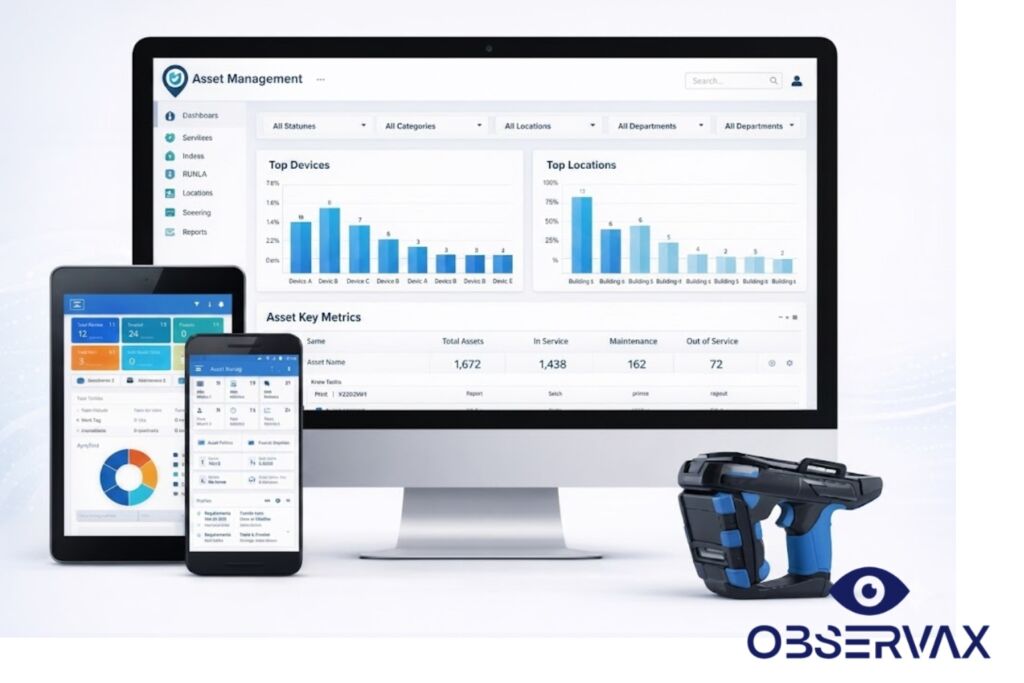
Hardware Asset Management (HAM) is a structured approach to tracking, managing, and optimizing physical IT assets across their entire lifecycle. It ensures that every asset is properly accounted for—from procurement and deployment to maintenance and disposal—while maintaining accurate and up-to-date records.
In modern enterprises, HAM plays a crucial role in improving operational efficiency and ensuring compliance. It helps organizations move away from manual tracking methods such as spreadsheets and adopt centralized systems that provide real-time visibility into asset inventory and usage.
Hardware Asset Management is not just about tracking devices—it’s about:
- Maintaining accurate IT asset inventory
- Optimizing asset lifecycle management
- Reducing hardware costs and wastage
- Ensuring compliance and audit readiness
State of the HAM Market in 2026
The Hardware Asset Management market has evolved rapidly as organizations increasingly depend on distributed IT environments. With the rise of remote work, cloud adoption, and digital transformation, managing hardware assets across multiple locations has become more challenging than ever.
Organizations today require more than basic asset tracking—they need intelligent systems that provide automation, real-time insights, and integration with other IT tools. Cloud-based HAM solutions are gaining popularity due to their scalability and ease of deployment, while technologies like barcode and RFID tracking are improving asset visibility and accuracy.
Artificial intelligence and analytics are also beginning to play a role in HAM, enabling predictive maintenance and better lifecycle planning. As businesses continue to scale their IT infrastructure, HAM is becoming a foundational component of efficient IT operations.
Key Trends:
- Adoption of automated asset tracking systems
- Shift toward cloud-based HAM platforms
- Integration with ITSM and procurement tools
- Increased focus on lifecycle and cost optimization
- Use of barcode and RFID technologies
Organizations are moving from manual tracking to intelligent, automated asset management ecosystems.
How Hardware Asset Management Works: Lifecycle-Based Approach
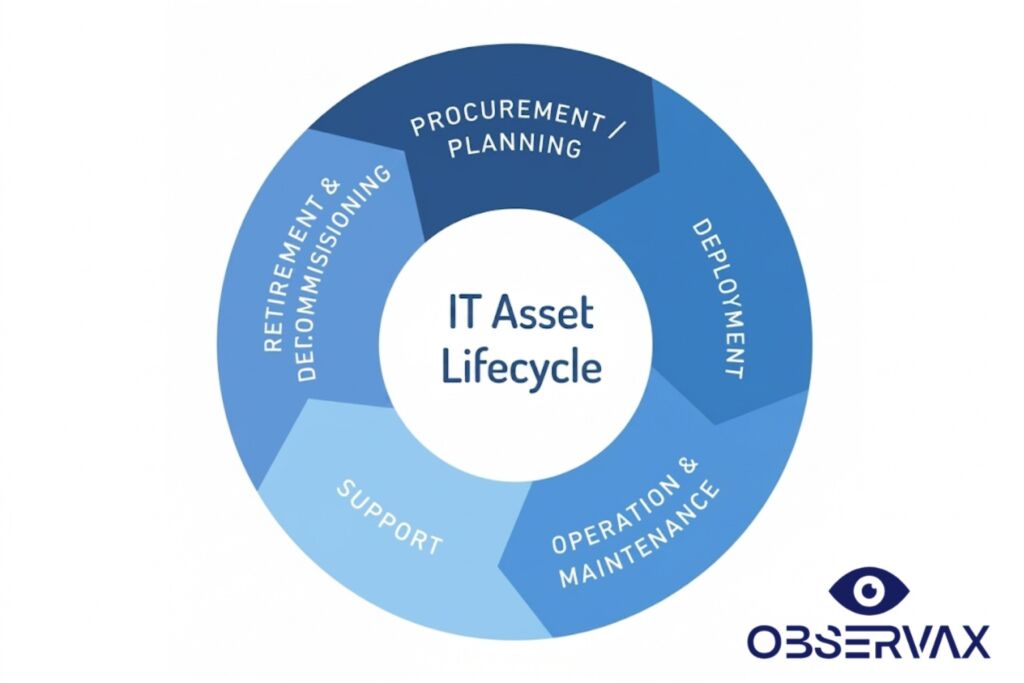
Hardware Asset Management operates through a structured lifecycle approach that ensures assets are effectively managed at every stage. This lifecycle provides visibility and control from the moment an asset is acquired until it is retired.
The process begins with procurement, where assets are purchased and recorded in the system with relevant details such as cost, vendor, and specifications. Once deployed, assets are assigned to users or locations, ensuring accountability and traceability. Continuous tracking is maintained through asset tagging technologies, allowing organizations to monitor usage, movement, and status in real time.
Maintenance is another critical stage, where repairs, upgrades, and warranty tracking are managed to extend asset life and reduce downtime. Over time, organizations analyze asset performance to identify underutilized resources and optimize their allocation. Finally, assets are securely retired and disposed of, ensuring compliance with regulatory and security requirements.
Key Benefits of Hardware Asset Management
A well-implemented Hardware Asset Management strategy delivers measurable value across both operational and business functions. By providing complete visibility into hardware assets, organizations can reduce inefficiencies and improve overall performance.
From an operational perspective, HAM simplifies asset tracking, reduces manual errors, and ensures better maintenance planning. It enables IT teams to quickly locate assets, monitor their status, and manage them effectively across multiple locations.
From a business standpoint, HAM helps control costs by preventing unnecessary purchases and improving asset utilization. It also enhances compliance by maintaining accurate records
required for audits and regulatory requirements. Additionally, better visibility into asset data supports informed decision-making and long-term planning.
Key Benefits:
- Improved visibility into IT asset inventory
- Reduced hardware costs and wastage
- Enhanced compliance and audit readiness
- Better asset utilization and lifecycle management
- Faster tracking and reduced manual effort
Essential Hardware Asset Management Features
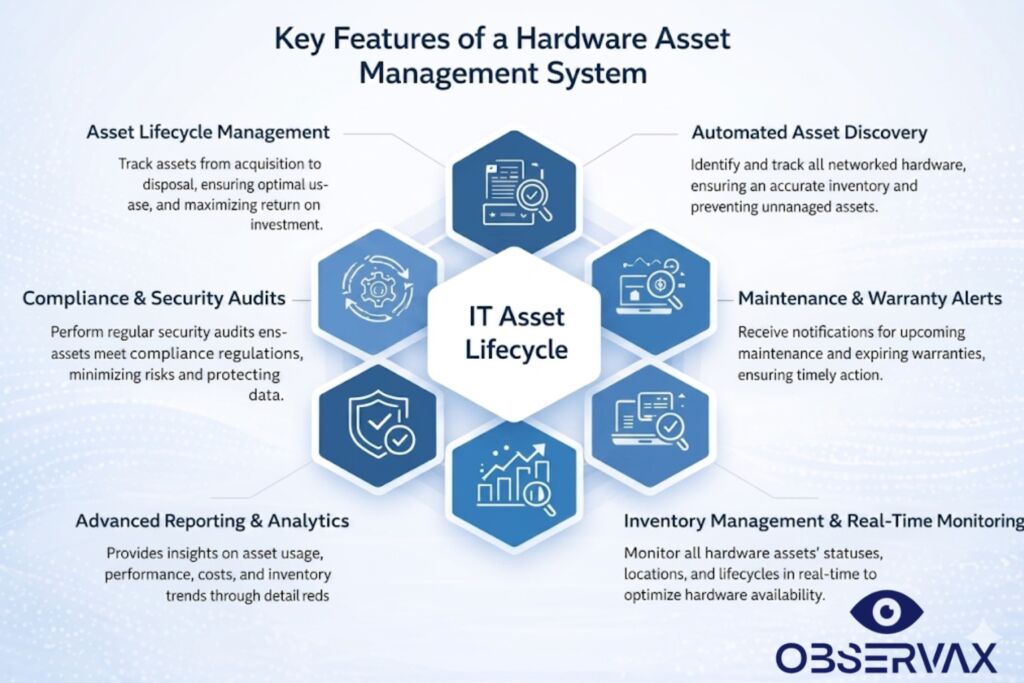
A modern Hardware Asset Management solution is equipped with features that support end-to-end asset lifecycle management.
These capabilities enable organizations to maintain accurate inventory records, automate tracking processes, and gain actionable insights into asset performance and utilization.
At its core, a HAM system provides a centralized asset inventory that acts as a single source of truth for all hardware assets. It also includes automated discovery and tracking mechanisms that reduce manual effort and improve accuracy. Integration with ITSM and
procurement systems ensures that asset data is aligned with service workflows and financial processes.
Advanced features such as lifecycle management, maintenance tracking, and reporting capabilities further enhance the effectiveness of HAM solutions, allowing organizations to optimize asset usage and plan for future needs.
Core Features:
- Centralized asset inventory
- Asset lifecycle management
- Asset allocation and ownership tracking
- Maintenance and warranty tracking
- Procurement and vendor management
Advanced Features:
- Automated asset discovery
- Barcode and RFID tracking
- Integration with ITSM tools
- Alerts and notifications
- Custom dashboards and reporting
Enterprise Features:
- Depreciation tracking
- Compliance and audit management
- Role-based access control
- Remote asset tracking
- Cloud scalability and integration
HAM vs Other IT Solutions
Hardware Asset Management (HAM) plays a distinct role within the IT ecosystem. While it complements other IT solutions,
its primary focus remains on managing physical assets rather than services or performance.
Key Differences:
- HAM vs ITSM (IT Service Management):
- HAM focuses on tracking and managing physical IT assets
- ITSM focuses on delivering and managing IT services
(incidents, requests, SLAs) - HAM provides asset data that supports ITSM processes
- HAM focuses on tracking and managing physical IT assets
- HAM vs NMS (Network Monitoring System):
- HAM manages hardware inventory and lifecycle
- NMS monitors network performance, uptime, and device health
- HAM answers “What assets do we have?” while NMS answers
“How are they performing?”
- HAM vs CMDB (Configuration Management Database):
- HAM tracks asset ownership, cost, and lifecycle
- CMDB tracks relationships between IT components and
services - HAM feeds accurate asset data into CMDB
- HAM vs Asset Tracking Tools (Basic):
- HAM provides end-to-end lifecycle management
- Basic tools only provide location or inventory tracking
- HAM includes maintenance, compliance, and reporting
features
- HAM vs Procurement Systems:
- HAM manages assets after purchase throughout lifecycle
- Procurement systems handle vendor selection and purchasing
- HAM ensures purchased assets are tracked and utilized
properly
Common Use Cases of Hardware Asset
Management
Hardware Asset Management is widely used across industries to maintain control over IT assets and improve operational efficiency. Organizations rely on HAM to track devices assigned to employees, manage data center infrastructure, and support remote work environments.
It is particularly valuable during audits, where accurate asset records are required for compliance. HAM also helps organizations optimize asset usage by identifying underutilized resources and reallocating them effectively.
Use Cases:
- Employee device tracking and management
- Data center asset management
- Remote workforce asset tracking
- Compliance and audit preparation
- Asset lifecycle and depreciation management
- Prevention of asset loss and theft
Best Practices for Implementing Hardware
Asset Management
Implementing Hardware Asset Management requires a structured and disciplined approach to ensure accuracy, efficiency and long-term value. Organizations should begin by creating a centralized asset inventory that captures all hardware details from procurement to disposal.
Standardizing asset tracking methods using barcodes or RFID improves visibility and minimizes manual errors. Integration with ITSM and procurement systems ensures seamless data flow across IT operations, while automation helps reduce repetitive tasks and improve efficiency. Regular audits and updates are essential to maintain data accuracy and ensure compliance.
Key Implementation Steps:
- Create a centralized and accurate asset inventory
- Use barcode or RFID for standardized asset tracking
- Integrate HAM with ITSM and procurement systems
- Automate asset discovery and tracking processes
- Conduct regular audits to maintain data accuracy
The Future of Hardware Asset Management
The future of Hardware Asset Management is driven by automation, intelligence, and scalability. With the rise of AI and analytics, HAM solutions are becoming more proactive, enabling predictive maintenance and smarter decision-making. Cloud-based platforms are making asset management more flexible and accessible, especially for distributed and remote work environments. Integration with broader IT ecosystems is also improving visibility and operational efficiency. As organizations continue to scale, HAM will evolve into a more intelligent and data-driven system.
Future Trends:
- Adoption of AI-driven predictive maintenance
- Increased use of cloud-based HAM platforms
- Real-time asset tracking and analytics
- Integration with ITSM, NMS, and other IT tools
- Greater focus on automation and self-service capabilities
Conclusion
Hardware Asset Management has evolved into a critical component of modern IT operations, enabling organizations to manage
their physical assets with greater efficiency and control. By providing complete visibility into asset inventory and lifecycle, HAM helps reduce costs, improve utilization, and ensure compliance. It allows organizations to move from reactive tracking to proactive asset optimization, supporting better decision-making and long-term planning. As IT environments become more complex, adopting a robust HAM strategy is essential for building a scalable and future-ready infrastructure.
Key Takeaways:
- HAM ensures complete visibility of IT asset inventory
- It reduces costs through better asset utilization
- Supports compliance and audit readiness
- Enables lifecycle-based asset management
- Helps organizations build a scalable IT environment